
If you struggle with chopping veggies or feel nervous around a chef’s knife, you’re not alone. Many people avoid cooking because they lack confidence in their knife skills cooking. I get it.
The fear of slicing a finger or making a mess can be overwhelming. But let me tell you, mastering these skills opens up a whole new world in the kitchen.
You’ll feel more in control and way less stressed. Plus, a properly executed chop can make your dishes look professional.
In this article, I’ll share practical tips and techniques that are easy to grasp. You don’t need to be a culinary expert to improve. I’ve practiced these skills myself, and I’ll show you how to get started.
By the end, you’ll have a better understanding of knife skills but also the confidence to tackle any recipe that comes your way. Ready to transform your cooking? Let’s dive in.
The Foundation: Safety and the Art of Grip
Let’s get serious. Safety in the kitchen isn’t just about reducing accidents; it’s about building confidence. You can’t cook with worry hanging over your head.
The key to mastering knife skills cooking lies in learning proper grips and techniques, starting with the “Claw Grip.” Tuck your fingertips under while your knuckles guide the blade. It’s like creating a protective shield for your fingers. Why risk it?
Then there’s the “Pinch Grip.” Hold the knife near the bolster with your thumb and forefinger. This isn’t just about control; it’s about feeling like a pro. Ever watched a chef slice with precision?
That’s the secret.
Body posture matters, too. Make sure your cutting board is stable. (A sliding board is a disaster waiting to happen.) A non-slip mat underneath can save you from unnecessary slips. And don’t forget your working height.
Keep it comfortable.
Distractions are your enemy. Focus when you’re working with sharp tools. Turn off your notifications, shut out the noise, and give your task the full attention it deserves.
Remember, mastering these fundamentals is the first step to becoming a kitchen maestro.
Important Knife Anatomy: From Edge to Tang
Every chef knows the backbone of knife skills cooking begins with understanding your tools. Let’s dive into the anatomy of a chef’s knife. The blade is the star here, with its sharp edge, strong spine, pointed tip, and firm heel.
Each part serves a role. The edge slices like a dream. The spine?
It offers control. A knife’s tip helps with precision cuts, and the heel powers through tougher tasks.
Now, let’s talk bolster and tang. The bolster is right where the blade meets the handle. It provides balance.
The tang (the) part of the blade embedded in the handle. Adds strength. Full tang knives?
They’re typically sturdier.
Different knives excel at different jobs. A Chef’s Knife is versatile. A Paring Knife handles delicate tasks.
Serrated ones? Perfect for bread and tomatoes.
When picking a knife, prioritize comfort. The material matters too. High-carbon steel stays sharper but needs care.
Stainless steel? It’s lower maintenance. Want to invest smartly in your culinary journey?
Choosing quality knives pays off in the long run. For more tips, read more.
Mastering the Core Techniques: Dicing, Mincing, and Julienne
Let’s talk knife skills cooking. Starting with the rocking motion, it’s great for mincing garlic and herbs. Keep the knife tip on the board, and rock it back and forth.
It feels like a dance where the knife and board move together. Garlic becomes a paste, herbs get finely chopped.
Now, dicing. Onions and carrots are your targets here. Start by making initial cuts.
Then, slice across those cuts for a uniform dice. Whether you want small, medium, or large pieces, it’s all about the orientation of the ingredient. Line things up right, and you’ll get even pieces every time.
Ever see a perfectly diced onion? That’s the magic of consistency.
Julienne is next. Think matchsticks. Begin by squaring off the ingredient, which is fancy talk for making it a rectangle.
Then slice thin, uniform pieces. This technique is perfect for stir-fries or salads where presentation matters. And let’s be honest, it just looks cool.
Why bother with all this? Simple. Even cooking, consistent texture, and a presentation that would make any Michelin chef nod in approval.
When your veggies cook evenly, they taste better. Trust me on this one.
Pro tip: Practice makes perfect. Repetition is key. Grab common veggies and just keep at it.
Over time, your hands will develop muscle memory. Before you know it, you’ll be slicing and dicing like a pro.
Does it sound daunting? Maybe. But with patience, you’ll get there.
Mastering Precision: Cut Like a Pro
Let’s talk Brunoise. You take your julienne (those thin matchstick veggies) and dice them even finer. Why?
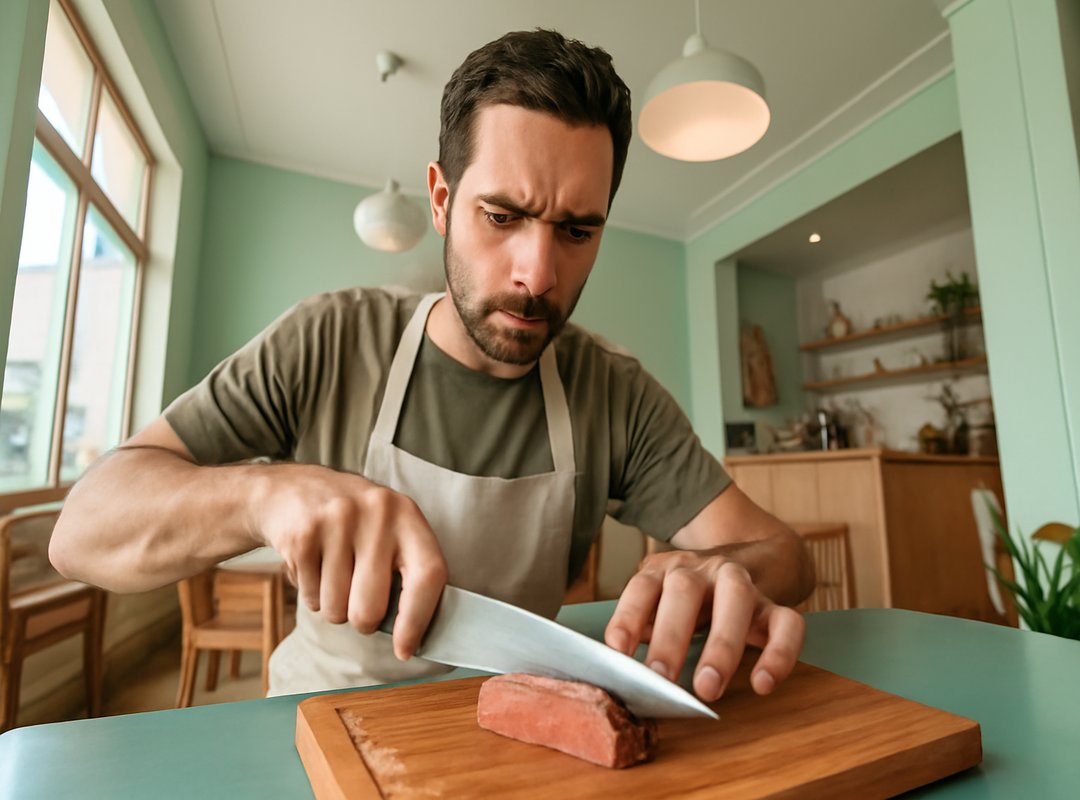
Maximum flavor release. Plus, it’s got that delicate look restaurants love. It’s a game-changer for soups and garnishes.
Ever tried a chiffonade? Roll those leafy greens tight and slice thin. It’s all about elegance and speed.
Perfect for quick-cooking dishes.
Then there’s the bâtonnet. Think of them as thicker sticks, a step before larger dice or for crudités. They’re the backbone of hearty stews.
Now, slicing. Unlike chopping, you draw the knife across the food. It’s not just for proteins; larger veggies benefit too.
But where do you see these techniques truly shine? Picture a ratatouille with those perfect dices or a salad with chiffonade basil. It elevates the dish.
To really nail these knife skills, you might want to check out important cooking skills. It’s a must.
Knife skills cooking isn’t just about speed; it’s about precision. Trust me, once you master these, your kitchen game changes entirely. Ready to step up your cooking?
Beyond the Cut: Keep Your Knife Sharp
Ever tried slicing a tomato with a dull knife? It’s a mess. That’s why maintaining a sharp edge is key.
Better safety, efficiency, and cleaner cuts all stem from a well-honed knife. You don’t just cut food; you preserve its quality. Let’s face it, your knife is your best friend in the kitchen.
Cleaning? Forget the dishwasher (seriously, it’ll ruin your knife). Hand wash it, dry immediately, and store it in a block or on a magnetic strip.
As for honing, grab a honing steel. Keep that blade aligned between proper sharpenings.
Need to restore a really dull edge? Consider professional sharpening or invest in a home tool like a whetstone. These methods will keep your knife razor-sharp, important for mastering knife skills cooking.
Here’s a tip: hone once a week, sharpen every three months depending on use. Want to raise your cooking game? This guide dives deeper into precision and technique.
Slice Into Culinary Confidence
Mastering knife skills cooking isn’t just for chefs. It’s for anyone who wants to raise their cooking. I know knife work can feel intimidating.
It doesn’t have to be.
The techniques I’ve shared (safety,) grip, and maintenance (are) important. They build a solid foundation. You’ll see improvements in efficiency and enjoy cooking more.
Practice is key. Start with simple, repetitive tasks. Chop some veggies or dice an onion.
You’ll find your rhythm. Each slice brings you closer to mastery.
So, are you ready to transform your kitchen experience? Pick up your knife with newfound confidence. Practice these techniques regularly.
Watch as your culinary creations become more precise, more delicious, and genuinely enjoyable to prepare.
Don’t let fear hold you back. Take action now. Embrace the challenge and start your journey today!
Your culinary confidence awaits.
 Rooted in the philosophy of mindful living and intentional environments, Orynthara Dwell explores the deep connection between our surroundings and our well-being. The brand focuses on the mastery of home styling, blending aesthetic grace with functional purpose to transform living spaces into personal sanctuaries. By emphasizing clean lines and a harmonious balance of form and light, Dwell provides the blueprint for creating interiors that reflect a refined, modern lifestyle.